

The Norwegian Transparency act Report 30.06.2026
Dale of Norway is a Norwegian textile company established in 1879 in Dale, Vestland, Norway. The company is internationally recognized for producing high-quality wool knitwear. Today, its products are sold in more than 20 countries across Europe and North America, in addition to distribution in Norway through both its own channels and wholesale partners.
Dale of Norway is one of very few brands that still manufactures its products in Norway. The factory was originally established in Dale beside the waterfalls, which continue to serve as a source of renewable electricity.
Today, almost all knitwear is knitted in Dale, while the company operates its own factory in Poland, where skilled seamstresses assemble the knitted components into finished garments. Dale of Norway also has a showroom in Nydalen, just outside Oslo, where parts of the management team and commercial departments are based.
Dale of Norway has a heritage and tradition that few other brands can match. Our garments are rooted in Norwegian knitting traditions, featuring classic Norwegian patterns. We manufacture in Norway, utilize local hydropower as an energy source, and rely on natural raw materials in our production.
Message from the CEO
Sustainability is a cornerstone of our business. For us, delivering products of the highest quality has always been a priority, and it will continue to be our guiding principle. We genuinely want our products to last, and this commitment influences every stage of our production process.
We recognize our responsibility to the environment and continuously work to minimize our environmental footprint. This involves a dedicated focus on sustainable practices throughout our value chain.
The resources we obtain from sheep are essential to our business, which is why it is of utmost importance that animal husbandry is conducted under good conditions. Animal welfare is an area where we do not compromise, and we work closely with our suppliers to ensure best practices are upheld.
Our employees are our greatest strength. They possess extensive expertise within their respective fields, developed through many years of experience. This reflects Dale of Norway’s commitment to providing good working conditions and treating employees with respect and care. We highly value our people and strive to provide a safe, supportive, and rewarding working environment.
Our commitment to quality, responsibility, and sustainability is unwavering. We will continue to strive to deliver products that are built to last while minimizing their impact on the environment.
“We recognize our responsibility towards the environment and continuously work to minimize our environmental footprint.”
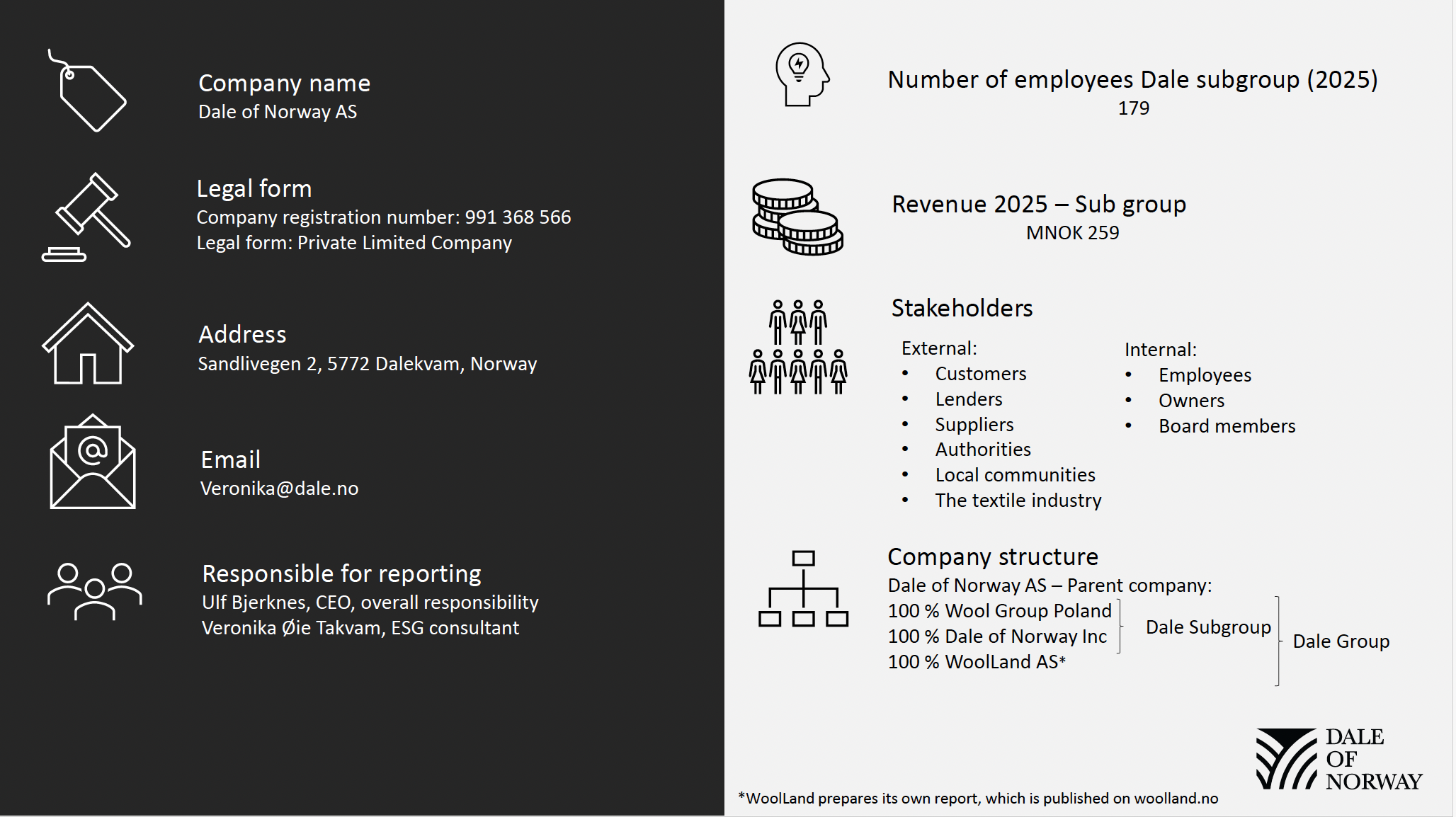
About the Transparency ActThe Transparency Act is the short name for “The Act relating to enterprises’ transparency and work on fundamental human rights and decent working conditions,” which entered into force in Norway on 1 July 2022. The purpose of the Act is to promote enterprises’ respect for fundamental human rights and decent working conditions in connection with the production of goods and the provision of services, and to ensure public access to information on how companies address adverse impacts on fundamental human rights and decent working conditions. The Act is based on the OECD Guidelines for Multinational Enterprises. We welcomed the Transparency Act from the outset and take our obligations seriously. |
About due dilligence assessments
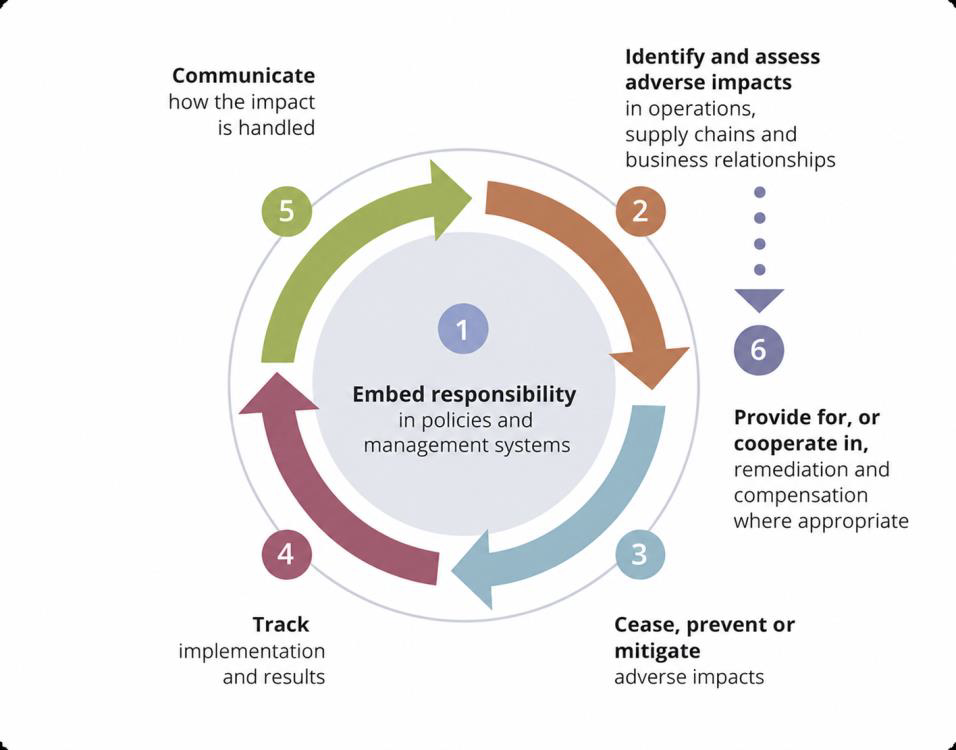
An important part of the requirements under the Transparency Act is the obligation to conduct due diligence assessments related to suppliers and subcontractors. Due diligence means anchoring responsible business conduct at the highest level of the organization, identifying and assessing potential adverse impacts, implementing appropriate measures to prevent, mitigate, and stop such impacts, monitoring the effectiveness of those measures, communicating with affected stakeholders, and ensuring or cooperating on remediation and compensation where necessary.
The process consists of six phases, where, based on an overall risk assessment, the need to carry out all or selected phases is determined:
1.Top Management Commitment
This step is primarily about ensuring that management and the Board of Directors take ownership of the company's work related to the Norwegian Transparency Act and the requirements set out in the Act. Furthermore, it is necessary to have an established organisation responsible for the day-to-day follow-up of this work, as well as relevant policies and plans for due diligence assessments. These policies and plans should cover the entire business, the supply chain and business relationships. It is important that responsibility for carrying out due diligence assessments is clearly assigned and that everyone involved understands their role. This step also involves promoting responsible business conduct among suppliers and business partners through agreements and contracts, in line with the OECD Guidelines.
The Norwegian Transparency Act should be part of our DNA. We have embedded our governance documents and due diligence procedures within the company's management and Board of Directors.
A dedicated ESG (Environmental, Social and Governance) position has been established within the company. The employee holding this position works closely with their manager, who participates in all management meetings and works closely with the CEO. Several times a year, the ESG Manager also attends management meetings. This ensures that the tone and expectations regarding responsible business conduct are communicated clearly and consistently from the top. Cross-functional project teams have been established to manage identified risks. These teams include employees with relevant expertise who are responsible for the practical implementation of actions. This ensures that management's expectations and objectives are understood and implemented throughout the organisation.
We have developed an organisational chart defining responsibilities and mandates, as well as an annual due diligence plan showing how we will carry out due diligence assessments throughout the year. These have been developed by management and approved by the Board of Directors. Management and the Board have also adopted our Code of Conduct, which is aligned with the OECD Guidelines.
2.Mapping and assessment of adverse impacts
This step involves identifying the company's actual and potential adverse impacts, including those within the supply chain, in order to prioritisethe most significant risks to people, society and the environment. It begins with establishing an overall risk picture, followed by prioritisingrisk areas for more detailed assessment and appropriate action. It also involves assessing how the company may be linked to any adverse impacts in order to determine the appropriate response. Stakeholder engagement is a key element of this process, in line with the OECD Guidelines.
Dale of Norway operates in an industry with global value chains where there are known risks of human rights violations and poor working conditions, particularly related to workers' rights, including child labour, forced labour, excessive overtime, occupational health and safety, wages and freedom of association. The industry is also associated with significant environmental challenges, including the use of chemicals, water-intensive processes and greenhouse gas emissions.
Dale of Norway mainly produces knitted garments at its own factory in Dale, with sewing carried out at its own production facility in Poland. In addition, we source selected garments from high-quality suppliers in Europe. Most of our raw materials and production inputs are purchased from manufacturers in Europe. Our long-term ambition is to carry out as much production as possible in-house, while ensuring that products we are not able to manufacture ourselves are sourced from Europe. Animal welfare and sustainable production are central to everything we do. This includes efforts to minimisethe use of chemicals, assess product transportation, focus on durable, high-quality products, increase recycling, work with certified manufacturers and suppliers, and ensure compliance with internationally recognisedstandards.
Risk identification
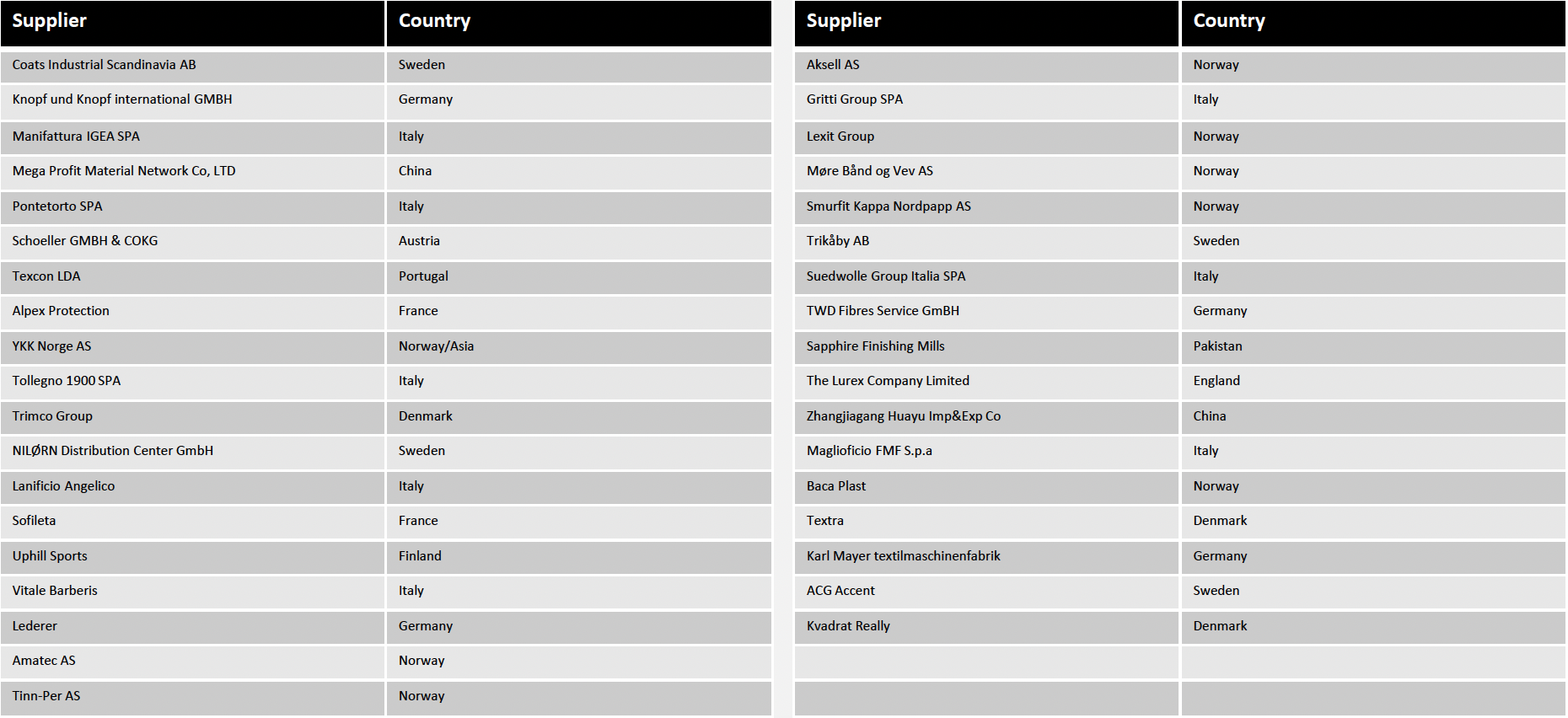
The process of collecting information about our suppliers and their sub-suppliers is ongoing. We find that the industry has not yet established a common practice for sharing information across the different tiers of the value chain. Gaining transparency into the conditions relating to raw materials and other production inputs at the beginning of the value chain remains challenging. We work with a small number of large suppliers of production inputs, with whom we have maintained long-term relationships. This gives us access to information covering a significant share of our production inputs through a limited number of reliable business partners. We are committed to being transparent about our raw materials and every stage of our production process.
Our annual value chain risk assessment begins with a review of our suppliers, including the countries in which they operate, their production processes, the certifications they hold, the production inputs they supply, and our knowledge of each supplier.
Based on the identified risks, we collect documented information about conditions at our suppliers' production facilities, aswell as information about their sub-suppliers.
It is important to us to conduct thorough due diligence on all new suppliers. We have developed a supplier requirements specification that our Purchasing Manager must use when selecting new suppliers. This checklist sets out the requirements we expect our suppliers tomeet.
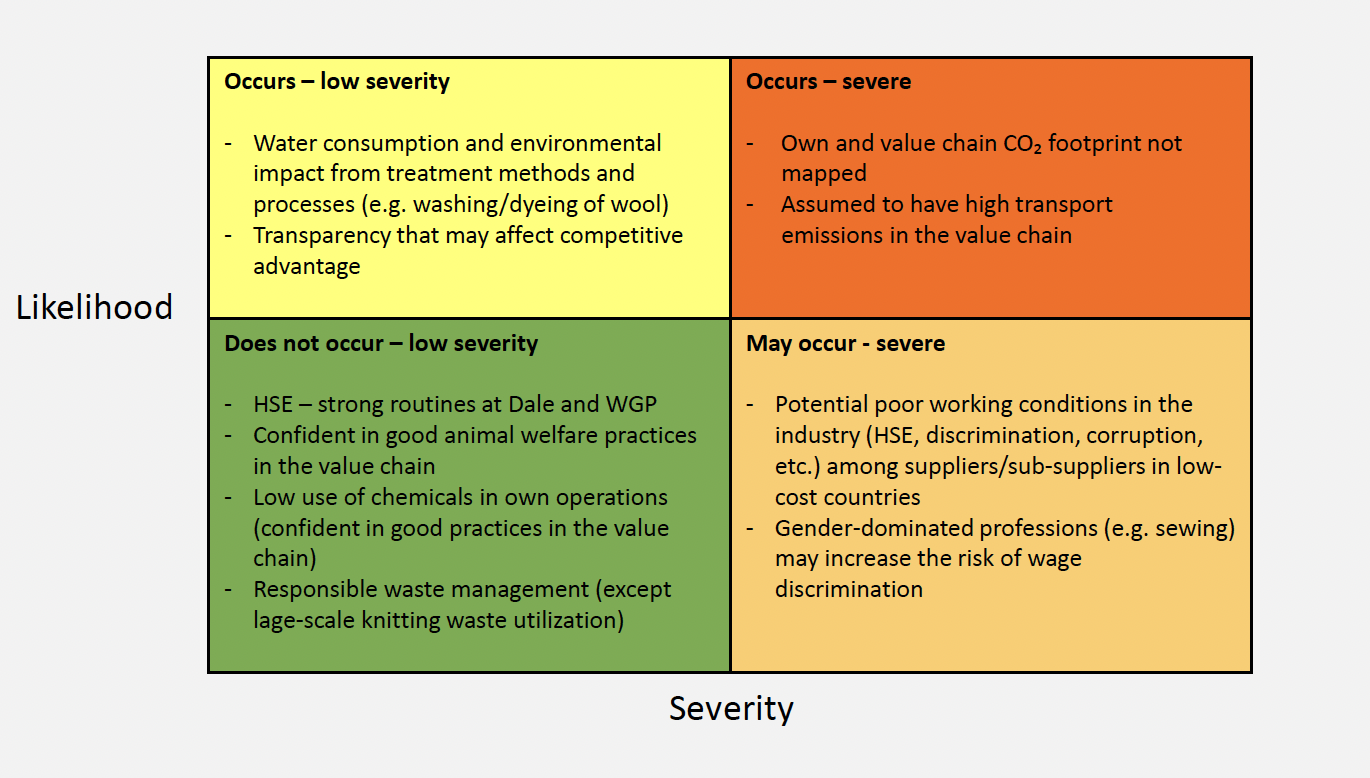
We have carried out an overall assessment of our value chain to identify where our greatest environmental footprint occurs and where we have the greatest opportunity to reduce our environmental impact. In our view, we can reduce our footprint by making even more conscious choices regarding the fibreswe use, the processes applied for fibretreatment and dyeing, making better use of textile waste from production, and contributing more to product repair and resale.
Our annual due diligence cycle under the Norwegian Transparency Act ensures that risk assessments are updated regularly. The cycle begins with due diligence assessments, followed by supplier reviews and the selection of suppliers requiring further assessment. Throughout the year, we work to obtain the necessary information from suppliers and sub-suppliers and address any findings in accordance with established deadlines. The cycle concludes with updates to this report whenever new findings are identified.
Supply chain
Suppliers of production inputs
Due dilligence assessment
3.Stop, prevent and mitigate
This step is about addressing findings from the mapping and assessment process by both ceasing the company’s own adverse impacts, and developing and implementing plans and procedures to prevent future adverse impacts (OECD).
We are proud that we have had continuous production in Dale in Vaksdal municipality since 1879. In the past, yarn was also produced at the factory. When this part of production was discontinued, Dale of Norway established cooperation with suppliers in Norway and Europe. We work with a small number of suppliers with whom we have long-standing relationships. We focus on close cooperation, open dialogue, and a purchasing process that does not place excessive pressure on our suppliers.
Risk assessment of suppliers and sub-suppliers:
At Dale of Norway, we are committed to being a responsible corporate actor. We are aware that trade in goods and services involves various types of risk. All our suppliers of production inputs are required to sign our Code of Conduct, which is based on the OECD Guidelines.
We have developed a supplier checklist that our purchasing staff must follow. The checklist was developed in collaboration between representatives from design, the CEO, ESG, and procurement. It sets out the requirements we place on our suppliers and is designed to meet the requirements of the Norwegian Transparency Act regarding the mapping and assessment of fundamental human rights and decent working conditions. These include:
Signing of our Code of Conduct
Overview of sub-suppliers
Information on the materials the product contains
BSCI report or equivalent (where relevant)
Overview of certifications
Confirmation that the wool is mulesing-free
Confirmation that products do not contain substances we do not permit
“The most sustainable garments are already in your wardrobe”
We have incorporated the checklist as part of our procedures for selecting new suppliers. This cross-functional work has provided valuable exchange of information across departments. It has also clearly shown that, if we are to make more sustainable choices, the work begins already in the design process.
Over many years, we have maintained close dialogue and cooperation with our suppliers. We work to ensure a clear and predictable production and delivery schedule. This enables our suppliers to plan their production processes optimally and avoid excessive overtime.
Access and factory control:
This area requires us to work systematically over time in order to achieve the level of control we want in our value chain. We obtain BSCI reports from relevant suppliers. BSCI stands for Business Social Compliance Initiative. This is a document that summarisesthe results of an audit or assessment of a supplier’s or factory’s social and ethical standards in accordance with BSCI criteria. In cases of serious deviations or uncertainties, we will contact the supplier and follow up on the findings. We will also assess how we can contribute to reducing the likelihood of such deviations occurring. Through focus and cooperation, we aim to contribute to living wages and decent working conditions in our production.
This area is also part of our annual cycle, where each year we select two suppliers for in-depth assessments.
Nativa
Dale of Norway is now Nativa certified. We are currently in the implementation phase of Nativa-certified yarn, which will enable Nativa certification for parts of our collection. Nativa is a certification that ensures responsible working conditions, animal welfare, and environmentally friendly production throughout the entire value chain.
Through this certification, we also achieve full traceability of the wool used in certified garments. In our case, the certification will initially apply to products made with our merino yarn “Zefir”. We are now close to being able to offer this certification for our Zefir garments.
Going forward, we aim to expand this certification to cover a larger share of our products by scaling it one yarn type at a time. We are already in the process of identifying the next yarn type to be included in the certification scope.
Textile waste and recycling
The textile industry is known for generating significant waste during the production process, as well as through consumers purchasing more clothing than necessary. “Slow Fashion” is a philosophy that emphasizes sustainability, quality, timelessness, and conscious consumption. This is an approach Dale has followed for many years and which will become even more important going forward. Our products are designed to remain relevant for many years and to have a quality that allows garments to be passed on to the next generation. We also work according to the concept of “fully fashion”, meaning that we use a minimum of material to produce each garment.
With production at our own factory in Dale, we have the ability to monitor sales and adjust production accordingly. As a result, we have never discarded finished pre-consumer products, and we do not intend to do so in the future. If production defects occur, these items are sold as seconds (B-grade products), and some have been donated. To make use of existing resources, we have developed, knitted, and sold our own styles based on surplus yarn from stock.
Dale is working on several initiatives to reduce waste from production, as well as initiatives exploring how waste can be used in other products. This has resulted in products such as shopping bags and toiletry bags
.We have also sent knitting waste to a factory in Denmark, where it has been transformed into panels. We have received both rigid panels, which have been used for store interiors in our newly opened shop in Bergen, and soft felt panels, which we plan to use for future product development.
We have further sent our waste to a textile recycling actor, received recycled fibres in return, and obtained feedback on the fibre quality from our yarn supplier. However, it remains a challenge to achieve fibres long enough to produce recycled worsted yarn.
Given that Dale of Norway products are of high quality and built on slow fashion principles, they are well suited for resale. We have previously conducted a resale pilot project with positive feedback, and we aim to continue facilitating resale initiatives going forward.
Impact of different treatment methods/processes
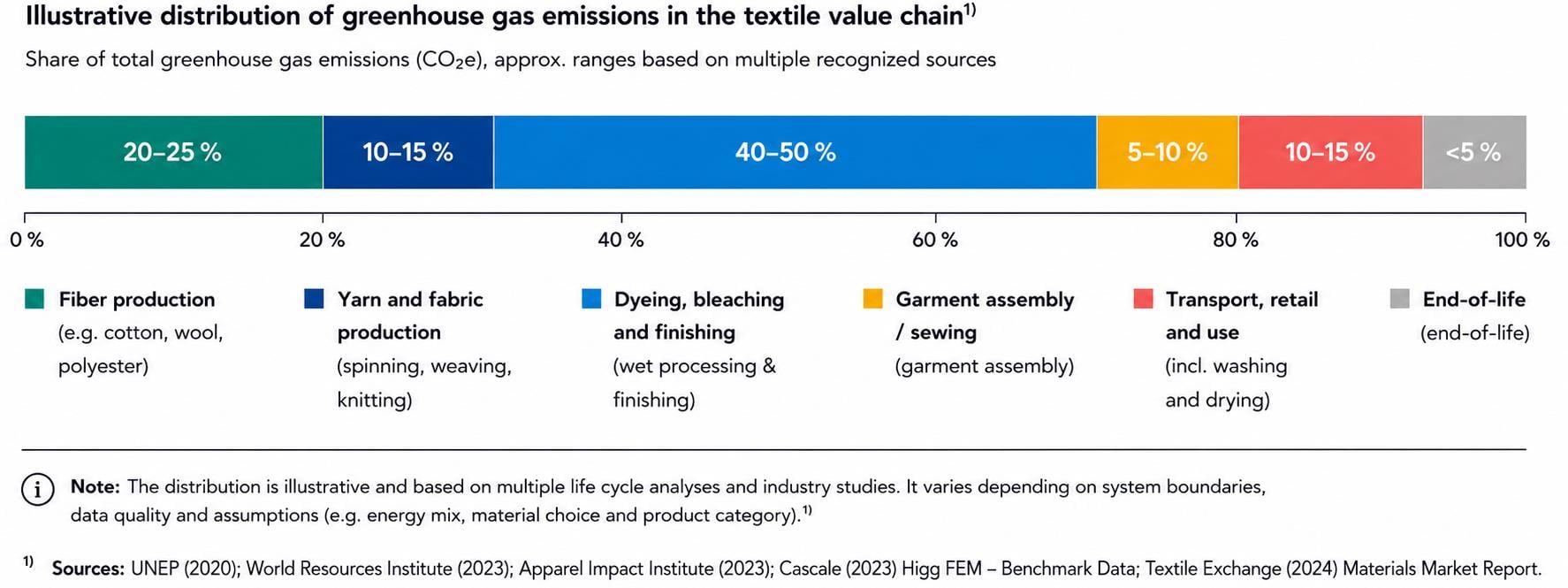
We have the opportunity to influence the footprint we leave from our production by making conscious choices regarding the fibres we use and the treatments applied to our products. Plant-based and animal-based fibres generally leave a lower environmental footprint, as they are biodegradable. When using synthetic fibres, we must have a clear rationale for why they are needed – for example, to extend the product lifetime or to achieve specific properties that cannot be obtained without the use of synthetic fibres.
In addition, we have implemented several initiatives, including:
Introducing yarns in our collection that are undyed, where the colour variations are based on the wool’s original natural colours.
Replacing “Superwash” treatment with “EXP” treatment* for our Seagul and Njård yarns, with plans to implement the same approach for our Zefir yarn as well.
Eliminating the use of PFAS** in our weatherproof products, with the exception of some remaining finished goods inventory containing PFAS.
**PFAS stands for per- and polyfluoroalkyl substances and are often used to make materials water-repellent and resistant to dirt.
*EXP treatment is a more environmentally friendly method of making wool yarn machine washable than Superwash treatment. The EXP treatment is based on natural salts as an oxidising agent.
4.Monitor
This step focuses on ensuring that the company has sufficient information to assess whether the measures implemented are actually effective. Good systems for registering and managing information also provide the foundation for the company’s external communication (OECD).
The ESG Consultant, together with their manager and the Managing Director, are responsible for monitoring the effects of the measures implemented. Many measures are difficult and resource-intensive to measure. However, we have gained some experience:
Our experience is that there has been a positive development in terms of suppliers’ understanding and willingness to provide information when we have requested this more actively in recent years.
Completed supplier visits have shown satisfactory focus on good working conditions.
We have seen improvements in BSCI report scores when we have followed up and requested this documentation.
We generally experience that suppliers do not have difficulties signing our Code of Conduct (CoC). However, for smaller suppliers sourcing large quantities of various small items from around the world, it can be challenging to maintain sufficient control further down the value chain towards the beginning of the supply chain.
There is a wide range of certifications available, and we still consider certifications to be a useful tool when selecting suppliers, provided that established and recognised certifications are considered.
Our established project groups for supplier follow-up ensure that we have an arena for information sharing, communication and systematic follow-up of suppliers.
We have a plan for objectives and measures related to our due diligence work, which is followed up through project groups. The work is documented and archived in a dedicated folder containing meeting minutes and received documentation.
The annual cycle ensures that the work related to the Transparency Act is continuous and that risk assessments are updated regularly. This ensures follow-up of due diligence assessments, employee training, and that findings from risk assessments are incorporated into strategies and action plans.
5.Communicate
This step focuses on communicating externally how the company manages risks, and how adverse impacts within its own operations, the supply chain, or with other business relationships have been addressed. Communication with affected rights holders is important (OECD).
This report will be published on our website. Relevant documents will be included as appendices.
“It is not enough to say it, we also have to mean it”
6.Remediation, compensation and grievance mechanisms
This step focuses on remedying harm that the company has caused or contributed to. It also involves ensuring, or cooperating to ensure, that those who have suffered harm, or are at risk of suffering harm, have access to a grievance mechanism through which their concerns can be heard (OECD).
If harm, or significant risks of harm, are identified, we will implement measures appropriate to the situation.
We want it to be, and to be perceived as, safe to report concerns related to our value chain. We have therefore established a whistleblowing form on our website.
Read the full report:
Transparency Act Dale of Norway 2026